
The Ultimate Guide to Direct Trade Coffee Facts and Examples
What Direct Trade Coffee Really Means (And Why It’s on Every Bag Right Now)
What is direct trade is one of the most searched questions in specialty coffee — and for good reason. Here’s the short answer:
Direct trade is a sourcing model where coffee roasters buy directly from farmers or producers, cutting out middlemen, paying significantly higher prices, and building long-term relationships based on transparency and quality.
At a glance:
- Who’s involved: A roaster and a farmer (sometimes with a trusted importer for logistics)
- What’s different: No certification body, no fixed price floor — just a direct negotiated relationship
- What farmers earn: Typically $3.25 to $7.00 per pound, versus $1.00–$1.70 on the open commodity market
- What consumers get: Traceable, high-quality coffee with a clear story behind it
- The catch: No governing body regulates the term — anyone can print it on a bag
So when you pick up a bag that says “direct trade,” it might mean a roaster flew to Guatemala, sat down with a farming family, tasted the harvest together, and agreed on a price that changed that family’s year. Or it might just mean good marketing.
That gap — between what the label promises and what it actually guarantees — is exactly what makes this topic worth understanding.
In this guide, we’ll break down how direct trade works, how it compares to Fair Trade, what it means for farmers and for your cup, and how to tell the real thing from the buzzword.
What is Direct Trade and How Does it Work?

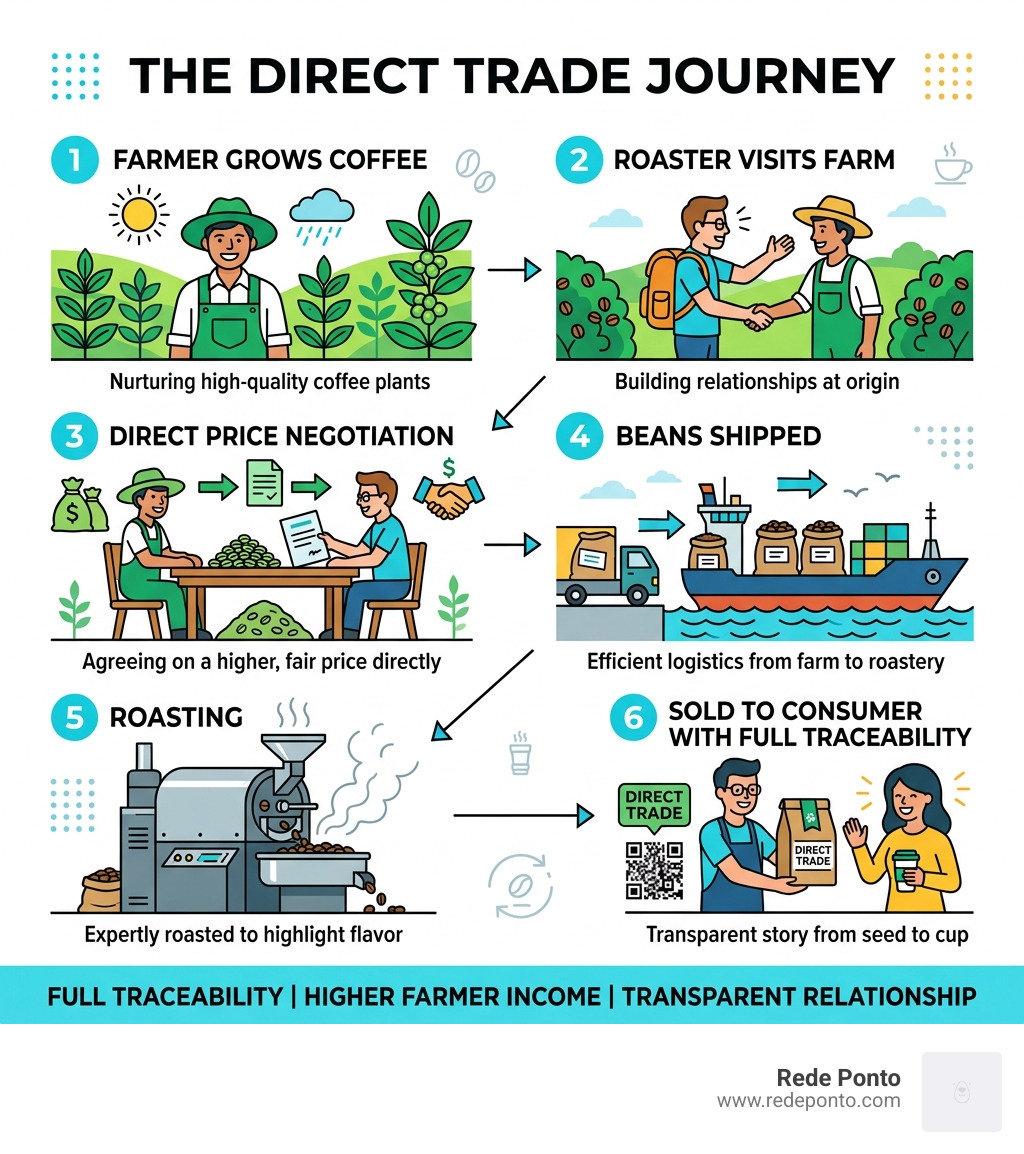
To understand what is direct trade, we first have to look at the “conventional” alternative. In a standard supply chain, coffee is treated like a commodity—no different from oil or gold. It passes through a dizzying array of hands: local collectors, processors, exporters, international brokers, and wholesalers. By the time it reaches a roaster, the connection to the person who actually grew the tree is completely lost.
Direct trade flips this script. It is a relationship-driven model where we, as the buyer, communicate directly with the producer. This model is built on three pillars: transparency, traceability, and mutual benefit.
The goal of Direct trade is to ensure that the value generated by a high-quality cup of coffee actually makes it back to the farm, rather than being swallowed by intermediary fees.
Core Principles of Direct Trade
- Price Transparency: Roasters know exactly how much the farmer receives, not just the “export price.”
- Quality Premiums: Prices are tied to the “cupping score” (quality) of the coffee, incentivizing excellence.
- Sustainability: Long-term contracts allow farmers to invest in their land and their workers.
- Direct Communication: Feedback loops where roasters tell farmers how the coffee tastes, and farmers tell roasters what they need for the next harvest.
Defining the direct relationship
In the 2026 coffee landscape, a “direct relationship” isn’t just a handshake; it’s a partnership. We view it as a value-sharing agreement. Instead of a farmer being a “vendor,” they are a collaborator. This means that if a harvest is particularly difficult due to weather, the roaster doesn’t just walk away—they work with the producer to find a solution. This mutual benefit creates a level of economic stability that the open market simply cannot provide.
The role of intermediaries and importers
There is a common myth that direct trade means there are zero other companies involved. In reality, moving coffee across the world is incredibly complex. Most small roasters don’t own cargo ships or have the legal licenses required to export from countries like Sumatra or Ethiopia.
This is where “direct trade importers” come in. These are logistical partners who handle the paperwork, customs clearance, and shipping. The relationship is still “direct” because the roaster selects the specific farm and negotiates the price directly with the farmer. The importer simply acts as the bridge to get the beans from point A to point B.
Direct Trade vs. Fair Trade: Understanding the Differences
One of the most frequent points of confusion is the difference between Fair Trade and Direct Trade. While both aim to help farmers, they use very different tools.
| Feature | Fair Trade | Direct Trade |
|---|---|---|
| Certification | Official 3rd-party audit required | No official governing body |
| Fees | Farmers/Roasters pay certification fees | No fees; money goes to coffee/quality |
| Price | Fixed “floor price” + social premium | Negotiated based on quality (usually higher) |
| Target | Focuses on large cooperatives | Works with individuals and smallholders |
| Standards | Broad social/environmental rules | Relationship-specific quality goals |
In 2025, the coffee world saw a massive shift. The C-market (the global commodity price) broke $4.00 per pound for the first time in decades. While this sounds good, it highlighted a flaw in the Fair Trade model: the Fair Trade floor price is currently set at $1.80 per pound. When the market spikes or production costs rise to $1.60 in Latin America, that “safety net” can feel quite low. Direct trade typically ignores these floor prices entirely, often paying double or triple the market rate to ensure a living wage.
Why what is direct trade matters for farmers
For a farmer, the commodity market is a roller coaster they can’t control. Between 2017 and 2020, prices sat below $1.00 per pound, while it cost farmers roughly $1.20 to $1.60 just to grow that pound. They were literally losing money on every bean.
Direct trade offers economic stability. By paying between $3.25 and $7.00 per pound, roasters allow producers to:
- Pay their pickers a living wage (which can be as low as $8-10 a day in conventional systems).
- Invest in technical support and better processing equipment.
- Improve the quality of life for their families and communities.
How what is direct trade impacts coffee quality
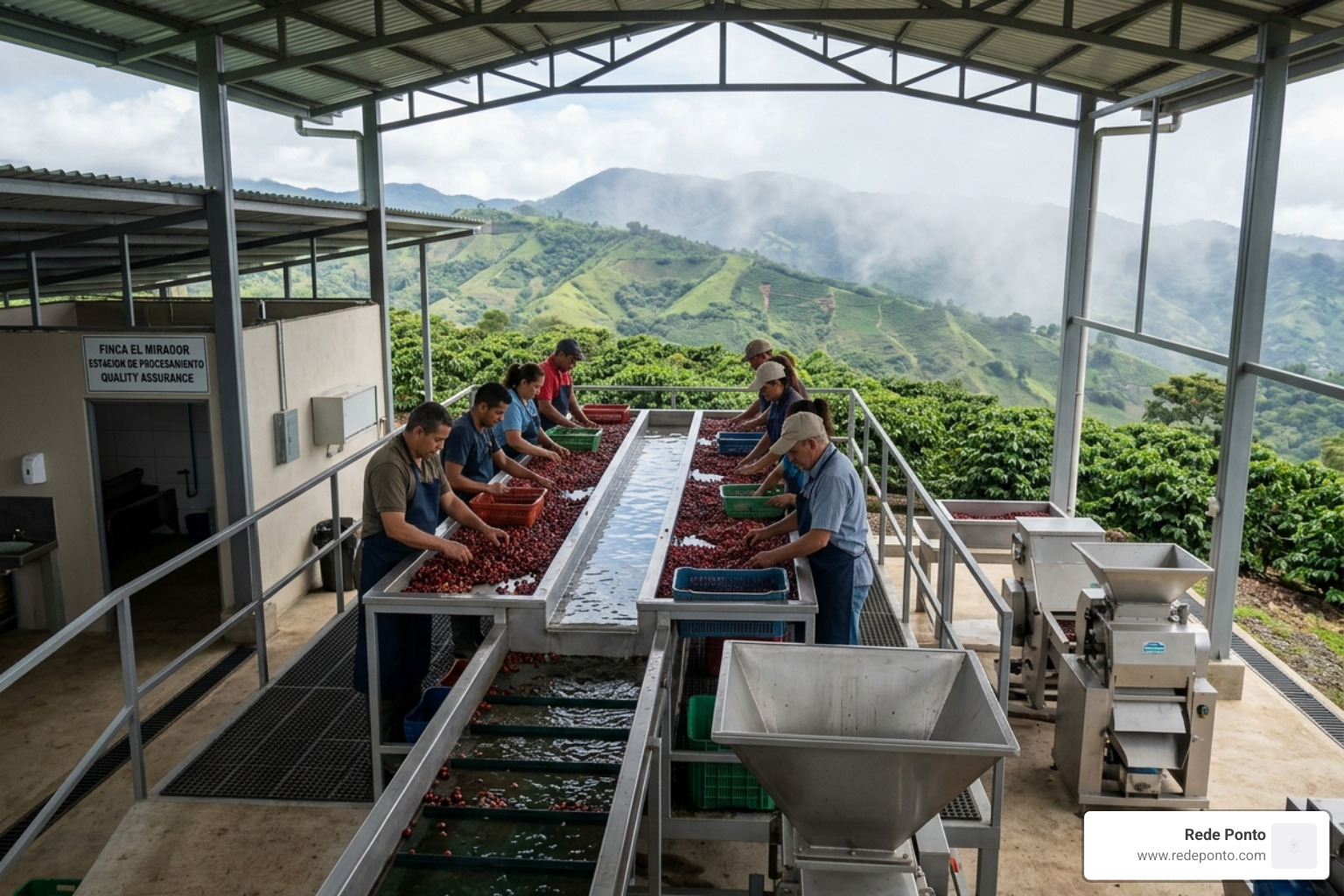
When a farmer is paid based on the weight of their crop (commodity style), they are incentivized to pick every cherry, even the unripe green ones. When they are paid based on quality (direct trade style), they focus on “selective picking”—only taking the perfectly ripe, red cherries.
This leads to:
- Micro-lots: Small batches of exceptional coffee from a specific hillside.
- Experimental Fermentation: Farmers can afford to try new methods (like anaerobic fermentation) that result in wild, fruity flavors.
- Shade-grown practices: Protecting the ecosystem, which leads to slower cherry maturation and more complex sugars.
The Benefits and Challenges of Direct Sourcing
Benefits for the modern consumer
As a consumer in 2026, you’ve likely noticed that retail coffee prices have increased by about 21% year-over-year. While this hits the wallet, direct trade ensures that your money is actually doing something. You get traceability—you know exactly which farm your coffee came from. You also get a superior flavor profile that commodity coffee simply can’t match.
Risks for producers and buyers
It’s not all sunshine and perfect lattes. Direct trade carries significant risks:
- For Producers: If a roaster commits to buying a lot but then pulls out because the “cupping score” was a point too low, the farmer is left with expensive coffee and no buyer.
- For Buyers: If a crop fails due to a late frost or political instability in the origin country, the roaster loses their supply and the money they may have advanced to the farmer.
- Logistics: Managing relationships in different time zones, languages, and legal systems is exhausting and expensive.
How Consumers Can Verify Direct Trade Claims
Because there is no “Direct Trade Police,” the term is vulnerable to greenwashing. Some companies use the label just because they bought from a large exporter who knows the farmer’s name. That isn’t direct trade.
Information to look for on the bag
To ensure you’re supporting a genuine model, look for specificity. A bag that just says “Direct Trade – Colombia” is a red flag. A bag that says “Direct Trade – Finca La Esperanza – Producer: Maria Rodriguez – 1750 masl” is much more likely to be authentic.
Check for:
- Specific Farm/Producer Name: Not just a region.
- Price Transparency: Does the roaster publish a “Transparency Report”? Some of the best roasters in the world now list exactly what they paid the farmer vs. the Fair Trade minimum.
- Relationship Length: “We have worked with Maria for 5 years” is a sign of a healthy direct trade partnership.
Identifying genuine transparency
True direct trade roasters are proud of their partnerships. They often share photos of their visits to the farm, details about the community projects they fund, and annual impact statements. If a company can’t tell you the last time they spoke to the producer, it’s probably not direct trade.
Frequently Asked Questions about Direct Trade
Do direct trade roasters use importers?
Yes, almost always. Unless a roaster is massive, they need a logistical partner to handle the shipping containers, customs, and trucking. The key is that the roaster maintains the financial and personal relationship with the farmer, while the importer handles the “heavy lifting” of transport.
Is direct trade always better than fair trade?
Not necessarily—they serve different purposes. Fair Trade is excellent for building infrastructure in large communities and providing a safety net for the poorest producers who might not have “specialty grade” coffee. Direct trade is better for rewarding high quality and creating the highest possible income for individual farmers. They are complementary models, not enemies.
Why is direct trade coffee more expensive in 2026?
Between the 2025 price spikes and the rising costs of climate change adaptation, coffee production has become more expensive. Direct trade prices reflect the true cost of coffee. When you pay $25 for a bag of direct trade beans, you aren’t just paying for the coffee; you’re paying for the insurance that the farmer can afford to plant trees again next year despite a changing climate.
Conclusion
At Rede Ponto, we believe that the future of specialty coffee isn’t just about better brewing—it’s about better sourcing. Understanding what is direct trade is the first step toward becoming a more conscious consumer. By choosing relationship-based coffee, you are participating in a system that values the human being at the other end of the supply chain.
We are committed to ethical brewing and long-term sustainability. Every cup you enjoy from our collection is a testament to shared value and the incredible hard work of producers around the globe.
