
Stop Spending Money and Try These Hot Coffee Recipes Instead
Why Hot Coffee Recipes Are Worth Making at Home
The best hot coffee recipes don’t require a fancy espresso machine or a $7 café visit. You can make café-quality drinks right in your kitchen — in under 10 minutes — with ingredients you probably already have.
Here’s a quick look at the most popular hot coffee recipes and what you need:
| Recipe | Key Ingredients | Prep Time |
|---|---|---|
| Classic Hot Coffee | Ground coffee, hot water | 5 min |
| Vanilla Latte | Strong coffee, milk, vanilla syrup | 10 min |
| Cappuccino | Instant coffee, sugar, hot water, milk | 7 min |
| Café Mocha | Coffee, cocoa powder, milk, sugar | 10 min |
| Beaten Coffee | Instant coffee, sugar, boiling water, milk | 10 min |
| Café au Lait | Brewed coffee, steamed milk | 5 min |
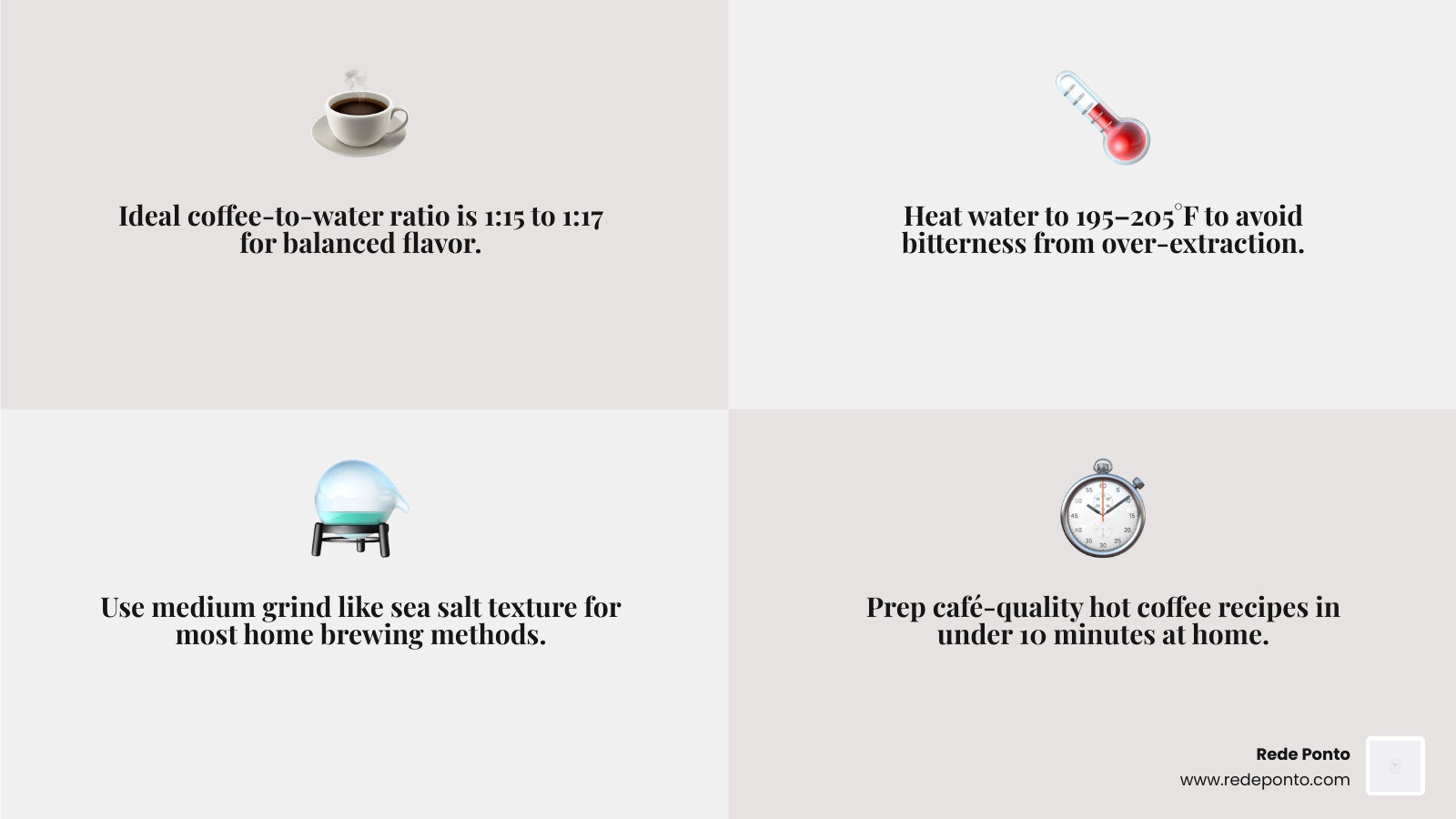
The core formula for any great hot coffee is simple: fresh coffee + the right water temperature + good ratios. Most recipes follow a 1:15 to 1:17 coffee-to-water ratio, with water heated to between 195–205°F — just below boiling.
Whether you’re looking to stop burning cash on daily café runs or just want more control over what goes into your cup, these recipes deliver. And once you nail the basics, the variations are endless.
The Foundation of Great Hot Coffee Recipes
Before we dive into the specific hot coffee recipes that will transform your mornings, we need to talk about the “Golden Rules” of brewing. In April 2026, the trend has shifted away from overly complicated gadgets and back toward mastering the fundamentals. At Rede Ponto, we believe that even the most basic cup of coffee can be a masterpiece if you respect the bean.
The first step to a perfect cup is the grind. For most home brewing methods, a medium grind — roughly the texture of sea salt — is your best friend. If your grind is too fine, your coffee will taste bitter and over-extracted; if it’s too coarse, it will taste sour and weak.
Next is the water. Since coffee is 98% water, using filtered water makes a massive difference. We always recommend heating your water to between 195°F and 205°F. Why? Because boiling water (212°F) actually “scortches” the coffee grounds, leading to that burnt, acrid taste we all want to avoid. If you don’t have a thermometer, just bring your kettle to a boil and let it sit for about 30 to 60 seconds before pouring.
Finally, let’s talk about the coffee-to-water ratio. This is the secret sauce for consistency. We suggest a ratio of 1:15 to 1:17. This means for every 1 gram of coffee, you use 15 to 17 grams of water. If you prefer a bolder, stronger cup, lean toward 1:15. If you like it smoother and lighter, 1:17 is your sweet spot.
Brewing Methods Comparison
| Method | Best For | Grind Size | Steep Time |
|---|---|---|---|
| French Press | Bold, full-bodied flavor | Coarse | 4 minutes |
| Pour-Over | Clean, nuanced notes | Medium-Fine | 2–3 minutes |
| Drip Machine | Convenience and batches | Medium | Automatic |
| Instant | Speed and ease | N/A | Immediate |

Essential Ingredients for Every Home Barista
To recreate our favorite hot coffee recipes, you need to stock your pantry with a few essentials. While we always advocate for starting with ethically sourced whole beans from the specialty coffee industry, you can still make magic with what you have.
- Whole Beans or Fresh Grounds: Look for medium roasts for balance or dark roasts if you love that smoky depth.
- Milk Options: 2% milk is the standard for a balance of creaminess and frothability. However, whole milk provides a richer texture, and heavy cream can turn a mocha into a dessert.
- Sweeteners: Granulated sugar or caster sugar are classics, but honey and maple syrup add unique floral and earthy notes.
- Flavor Boosters: Vanilla extract, cocoa powder, and cinnamon are the “big three” for home baristas.
- A Pinch of Salt: This is our favorite expert hack. A tiny pinch of salt in your grounds or finished cup rounds out the bitterness and enhances the natural sweetness of the coffee.
Beyond the flavor, coffee is packed with benefits. Scientific research on coffee antioxidants shows that your daily ritual is doing more than just waking you up; it’s providing a healthy dose of protective compounds.
Mastering the Perfect Homemade Vanilla Latte
A latte is traditionally an espresso-based drink consisting of one part espresso, two parts steamed milk, and a thin layer of frothed milk on top. But you don’t need a $1,000 machine to make one!
Ingredients:
- 1/2 cup strong brewed coffee or 2 shots of espresso
- 1 cup milk (dairy or oat milk works great here)
- 1–2 tablespoons vanilla syrup (homemade or store-bought)
Instructions:
- Brew: Make a “concentrated” version of your coffee. If you’re using a drip machine or pour-over, use double the amount of grounds you normally would for the same amount of water.
- Heat and Flavor: In a small saucepan, warm your milk and vanilla syrup over medium heat until it’s steamy and small bubbles form around the edges. Do not let it reach a rolling boil!
- Froth: Use a handheld frother or one of the “no-gear” hacks we mention later in this article to create a light, airy foam.
- Assemble: Pour your strong coffee into a large mug. Slowly pour the steamed milk over the coffee, using a spoon to hold back the foam until the very end. Top with that beautiful layer of froth.

Quick Café Classics You Can Make in Under 10 Minutes
We know life is busy. Sometimes you want the “warm hug-in-a-mug” feeling without the 20-minute production. These hot coffee recipes are designed for speed, coming in at under 10 minutes from start to finish.
When making these classics, keep an eye on the “prep vs. cook” time. Most of these recipes involve about 5 minutes of preparation (measuring and grinding) and 5 minutes of active “cooking” (heating milk and assembling). For those watching their intake, a standard home-brewed latte with 2% milk and a tablespoon of syrup typically sits around 120–150 calories, far lower than the 400+ calorie versions found in many commercial chains.
Frothy Beaten Coffee and Instant Hot Coffee Recipes
This method, often called “Beaten Coffee” or “Indian Cappuccino,” is a revelation for anyone who thinks instant coffee is boring. It creates a thick, caramel-colored foam that rivals any espresso-based drink.
The Technique:
- In a mug, combine 1.5 teaspoons of instant coffee powder and 1.5 tablespoons of sugar.
- Add exactly 1 tablespoon of hot water.
- The Beating: Use a spoon to whisk the mixture vigorously. At first, it will be a dark liquid. After 2–3 minutes of beating, it will turn into a thick, pale, frothy paste. This is the “base” of your drink.
- The Finish: Pour 1 cup of boiling milk over the paste and stir gently. The foam will rise to the top, creating a creamy, café-style texture.
If you are looking for more ways to elevate your daily brew, you can find More info about specialty coffee services on our main site, where we dive deep into the ethics of the beans that make these recipes shine.
How to Recreate a Café Mocha at Home
A Café Mocha is essentially a latte with a chocolatey twist. It’s the perfect bridge between a hot chocolate and a coffee.
To ensure your mocha isn’t clumpy, we suggest the “barista melt” trick. Add your chocolate sauce or cocoa powder to the bottom of the mug first. Pour in a splash of hot coffee and stir until you have a smooth chocolate syrup. Only then should you fill the rest of the mug with coffee and milk. This ensures a consistent flavor in every sip.
For those special winter evenings or gatherings, you might even try a Spiked Hot Mocha | America’s Test Kitchen version. This “adult” twist uses coffee liqueur and a dusting of cocoa to create a sophisticated cocktail. If you’re serving a crowd, you can scale this recipe up and keep the mocha base warm in a thermal carafe or a slow cooker on the lowest setting.
Barista Secrets: Frothing and Flavoring Without Fancy Gear
One of the biggest hurdles to making hot coffee recipes at home is the lack of a steam wand. But we have a secret: you don’t need one. Aeration is simply the process of forcing air into milk to create bubbles. Here are three ways to do it with household items:
- The Mason Jar Shake: This is the most accessible method. Fill a glass jar halfway with milk, screw the lid on tight, and shake it like crazy for 30–60 seconds. Remove the lid and microwave the jar for 30 seconds. The heat “sets” the foam, making it stable enough to pour.
- The French Press Pump: If you own a French press, you have the best manual frother in the world. Pour warm milk into the press and pump the plunger up and down rapidly for 20 seconds. You’ll get professional-grade microfoam.
- The Blender Pulse: Pour warm milk into a blender and pulse on high for a few seconds. This creates very large, airy bubbles—perfect for a traditional cappuccino.
For more tips on achieving the perfect texture in your drinks, check out the guide on Perfect Iced Coffee – Damn Delicious, which includes excellent advice on milk-to-coffee ratios that apply to hot drinks too.
Simple Methods for Homemade Flavored Syrups
Stop buying expensive plastic bottles of syrup. You can make a batch of “Simple Syrup” that lasts for up to a month in your refrigerator.
The Base Recipe (1:1 Ratio):
- 1 cup water
- 1 cup granulated sugar
Heat the water and sugar in a saucepan over medium heat, stirring until the sugar is completely dissolved. Once it cools, you have a plain simple syrup.
- For Vanilla Syrup: Add 1 tablespoon of pure vanilla extract once the syrup has cooled.
- For Caramel Syrup: Melt the sugar first until it turns amber, then very carefully whisk in the water (it will steam and splatter, so be careful!).
- For Cinnamon Syrup: Add 2 cinnamon sticks to the water and sugar while it simmers.
Store these in an airtight glass container or a mason jar in the fridge. They’ll stay fresh and ready for your hot coffee recipes for 2–4 weeks.
Understanding the Difference: Latte vs. Cappuccino vs. Café au Lait
If you’ve ever stood at a café counter feeling confused, you’re not alone. Here is the quick breakdown of these “milk coffee” variations so you can recreate them accurately:
- Latte: The “milkiest” option. It’s 1/3 espresso and 2/3 steamed milk, with just a tiny “hat” of foam.
- Cappuccino: The “balanced” option. Traditionally, it’s equal parts espresso, steamed milk, and foam (1:1:1). It feels much lighter and airier than a latte.
- Café au Lait: The “home-style” option. Unlike the others, this uses regular brewed coffee (not espresso) mixed with equal parts steamed milk. It has no foam and is the easiest to make in a big batch.
- Mocha: A latte with chocolate syrup or cocoa powder added.
Pro Tips to Ensure the Best Flavor and Temperature
Nothing ruins a great hot coffee recipe faster than a lukewarm cup. In the specialty coffee industry, we focus on “thermal mass.”
Tip #1: Pre-warm your mug. While your coffee is brewing, fill your mug with hot tap water or a bit of boiling water. Let it sit for a minute, then dump it out before adding your coffee. This prevents the cold ceramic from sucking the heat right out of your drink.
Tip #2: Clean your equipment. Old coffee oils turn “rancid” over time. If your French press or drip carafe smells like old coffee even after a rinse, it’s affecting your flavor. Use a bit of vinegar or a specialized coffee cleaner once a week to keep things fresh.
Tip #3: Avoid the “re-heat.” Microwaving coffee changes its chemical structure, often making it taste more acidic and bitter. It’s always better to brew a smaller, fresh cup than to reheat a giant carafe that’s gone cold.
Tip #4: Check your bean freshness. Coffee is a fresh agricultural product. For the best flavor, try to use beans within 2–4 weeks of their “roast date.” Store them in an airtight container in a cool, dark place—never the freezer!
Common Brewing Mistakes to Avoid
- Using boiling water: As mentioned, 212°F is too hot. Let it cool!
- Eyeballing measurements: Use a scale or a consistent scoop. Consistency is key to improvement.
- Using stale beans: If they don’t smell like anything, they won’t taste like anything.
- Ignoring water quality: If your tap water tastes like chlorine, your coffee will too.
Frequently Asked Questions about Hot Coffee
How can I froth milk at home without an espresso machine?
As we detailed above, the “Mason Jar Shake” and the “French Press Pump” are your best bets. The French press method produces the finest, most “café-like” microfoam. If you have a simple handheld whisk, you can also whisk warm milk in a bowl until it becomes frothy, though this takes a bit more elbow grease!
What is the best coffee-to-water ratio for a single serving?
For a standard 8-ounce cup of coffee, we recommend using about 2 tablespoons (roughly 15 grams) of ground coffee. This follows the 1:15 ratio which provides a bold, satisfying flavor that stands up well to milk and sugar.
How do I prevent my hot coffee from tasting bitter or burnt?
Bitterness is usually caused by two things: water that is too hot or steeping for too long. Ensure your water is below 205°F and that you aren’t letting your French press sit for more than 4 minutes before plunging and pouring. Also, don’t forget that tiny pinch of salt—it’s a miracle worker for neutralizing bitterness!
Conclusion
Making incredible hot coffee recipes at home is one of the most rewarding rituals you can adopt. It’s a moment of peace in a busy morning, a way to save thousands of dollars a year, and a chance to experiment with flavors that suit your exact palate.
At Rede Ponto, we are passionate about the journey of the bean. From the ethical sourcing of our specialty coffee to the final pour in your kitchen, we believe every step matters. When you choose high-quality, sustainable beans, you aren’t just making a better cup of coffee—you’re supporting a fairer coffee industry for farmers around the world.
So, put down the car keys and pick up your kettle. Whether it’s a frothy beaten coffee, a cozy vanilla latte, or a bold French press, the perfect cup is already waiting for you at home.
Ready to elevate your home brewing game? Start brewing with Rede Ponto and discover the difference that ethically sourced, specialty beans can make in your favorite recipes. Happy brewing!
