
Eco-Friendly Coffee Gear That Doesn’t Cost the Earth
Your Morning Cup Has a Hidden Cost — Here’s How to Lower It
Ethical sustainable coffee equipment is gear that reduces environmental harm, avoids toxic materials, and is made by companies that treat workers fairly. Here’s a quick look at the best options by category:
| Category | Best Choices |
|---|---|
| Manual brewers | AeroPress, French press, moka pot, pour-over |
| Non-toxic materials | Stainless steel, borosilicate glass, BPA/PFAS-free |
| Certifications to seek | Fair Trade, Rainforest Alliance, Energy Star, B Corp |
| Pod alternatives | Compostable capsules, reusable steel pods |
| Most ethical brand (rated) | AeroPress (63/100, Ethical Consumer) |
| Lowest energy brewing | Manual methods (0 kWh), electric kettle (28.6 kWh/yr) |
Every cup of coffee leaves a footprint. The beans. The machine. The pod that ends up in a landfill.
Consider this: of the 39,000 coffee capsules produced every minute worldwide, only 29,000 are recycled. The rest go to landfill. And the average drip machine consumes 100–150 kWh of electricity per year — roughly equivalent to driving 263 miles in greenhouse gas emissions.
The good news? The most sustainable brewing methods are often the simplest — and the cheapest.
This guide cuts through the noise. Whether you’re upgrading your home setup or building one from scratch, we’ll show you which gear is genuinely better for the planet, which brands back it up with real practices, and what to avoid.
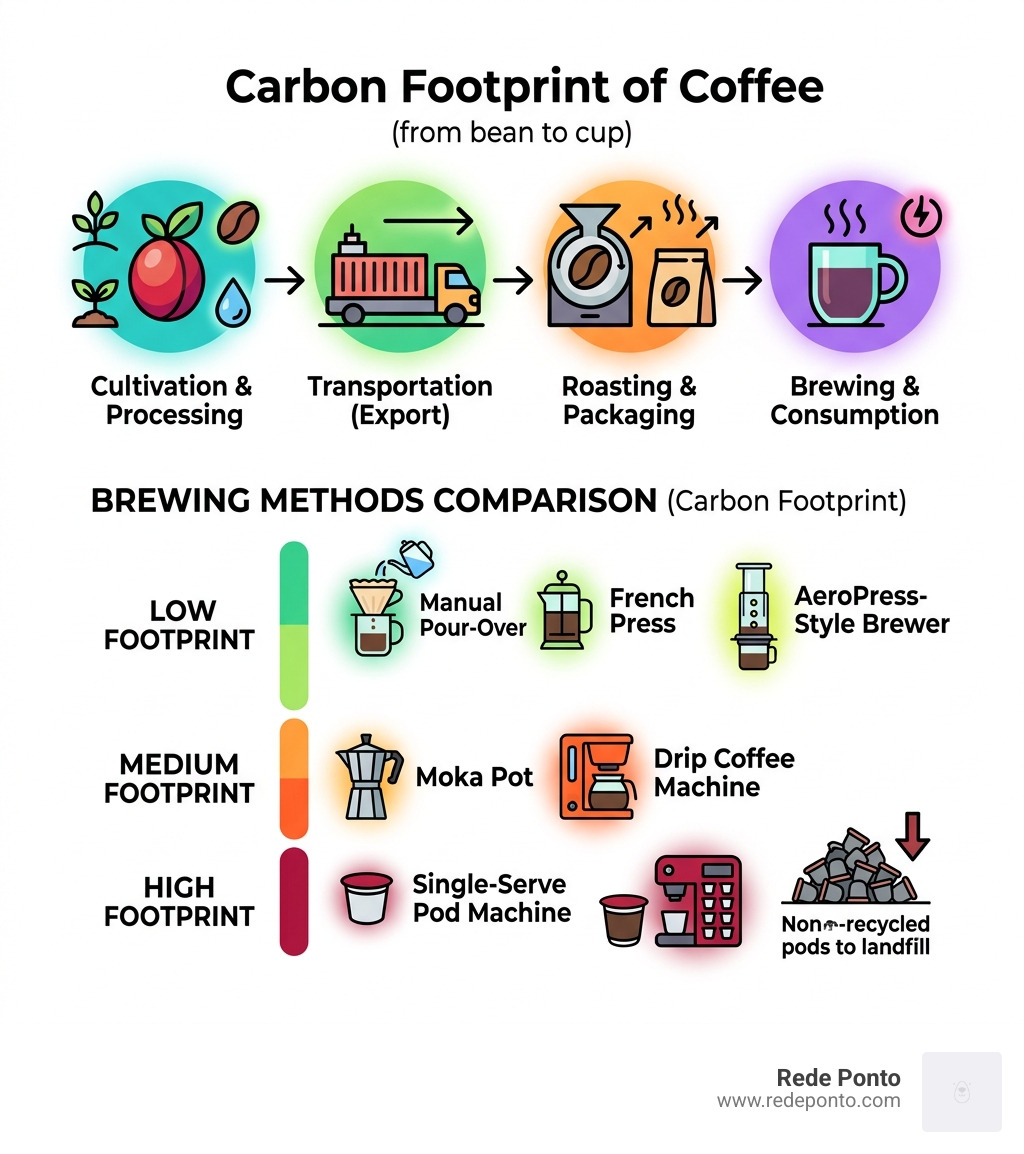
Choosing Ethical Sustainable Coffee Equipment: Manual vs. Electric
When we talk about ethical sustainable coffee equipment, the first fork in the road is deciding between a manual or an electric setup. It is a classic battle of convenience versus conservation. In our experience at Rede Ponto, the “best” way to brew is the one that aligns with your values without sacrificing the flavor of your ethically sourced beans.
Manual brewing is the undisputed champion of low-impact coffee. These devices require zero electricity to operate, have fewer moving parts to break, and are often made of highly recyclable materials like glass or stainless steel. On the flip side, electric machines offer automation but come with a heavier “embodied energy” cost—the energy used to manufacture the circuit boards, plastic housings, and heating elements.
A lifecycle analysis shows that for a standard drip machine used daily for five years, a staggering 89% of its total lifetime energy expenditure comes from usage (heating and keeping the water hot). Manual methods bypass this entirely, especially if you use an efficient way to boil your water.

Benefits of Manual Methods like AeroPress and French Press
If you want to be a sustainable coffee hero, go manual. The AeroPress is a standout performer, currently boasting a 63/100 ethical rating from Ethical Consumer—the highest among major brands. It’s lightweight, portable, and virtually indestructible, meaning it won’t end up in a scrap heap after two years.
Other manual favorites include:
- French Press: Simple, plastic-free (if you choose glass/steel models), and produces zero paper waste.
- Moka Pot: An Italian classic invented in the 1930s. It’s made of aluminum or steel and can last a lifetime with just a simple gasket change.
- Pour-over: Using a Chemex or Hario V60 with reusable stainless steel or organic cotton filters creates a “zero-waste” ritual that hipsters and environmentalists can finally agree on.
Energy Consumption in Electric Brewing
If you aren’t ready to give up your electric machine, it’s important to understand the numbers. Not all electric brewing is created equal.
| Device Type | Annual Energy Use (kWh) | Greenhouse Gas Equivalent |
|---|---|---|
| Drip Coffee Machine | 100–150 kWh | 263 miles driven |
| Single-Serve Pod Machine | 45–65 kWh | 114 miles driven |
| Electric Stove (to boil water) | 185 kWh | 320+ miles driven |
| Electric Kettle | 28.6 kWh | 50 miles driven |
The “silent killer” of energy efficiency in drip machines is the warming plate. Keeping a pot of coffee hot for an hour uses significantly more energy than the actual brewing process. We recommend choosing machines with an auto-off feature or, better yet, a thermal carafe that keeps coffee hot using vacuum insulation rather than electricity.
Non-Toxic Materials and Longevity in Coffee Gear
Sustainability isn’t just about energy; it’s about what the equipment is made of and how long it stays in your kitchen. We’ve all seen the “planned obsolescence” of cheap appliances that die the moment the warranty expires. Ethical sustainable coffee equipment prioritizes repairability and non-toxic materials.

Best Non-Toxic Options for Ethical Sustainable Coffee Equipment
Health and environmental safety go hand-in-hand. Many older or cheaper coffee makers use plastics containing BPA or PFAS, which can leach into your hot coffee.
To ensure a “clean” cup, look for:
- Borosilicate Glass: Heat-resistant and chemically stable. Just be careful—while glass is natural, Pyrex used in many carafes is chemically treated and cannot be recycled in standard glass bins.
- Stainless Steel: Look for 18/8 or 304 food-grade steel. It’s durable, non-reactive, and 100% recyclable at the end of its life.
- Plastic-Free Paths: Even “BPA-free” plastics can sometimes be controversial. The most ethical choice is to minimize plastic contact with hot water entirely.
Certifications to Look For in Ethical Gear
How do you know if a brand is actually ethical or just “greenwashing”? Look for third-party stamps of approval:
- B Corp: Certified companies that meet high standards of social and environmental performance.
- Energy Star: For electric machines, this ensures the device meets strict energy-efficiency guidelines.
- Rainforest Alliance / UTZ: While usually for the beans, these certifications also indicate a brand’s commitment to a sustainable supply chain.
- Fair Trade: Ensures that the people making the machines (and growing the coffee) are treated and paid fairly.
High-Efficiency Electric Roasting and Brewing Innovations
The world of coffee technology is moving fast. By April 2026, we are seeing incredible innovations that allow even large-scale roasting and brewing to be eco-friendly.
Sustainable Espresso and Zero-Waste Systems
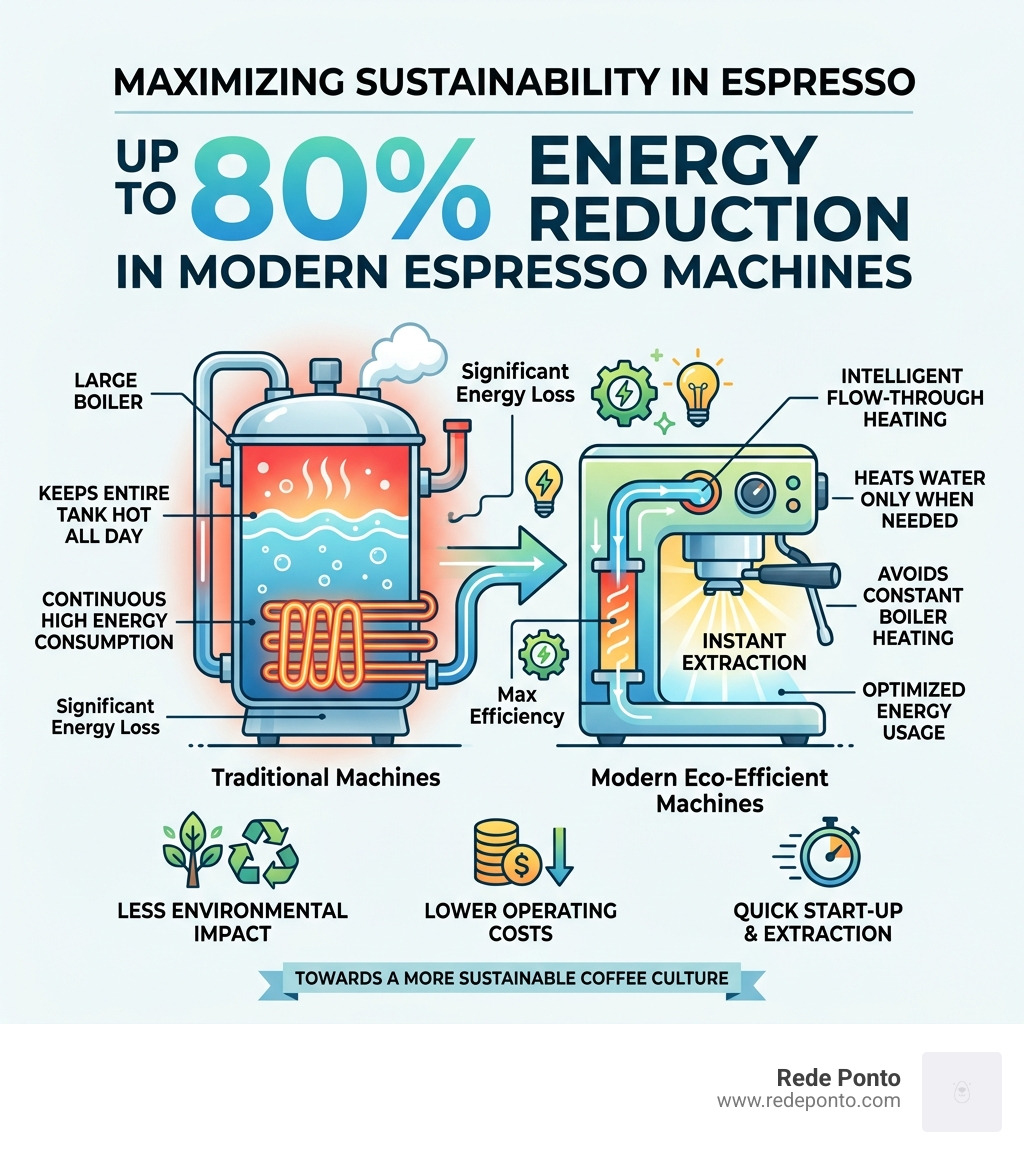
One of the most exciting developments is the rise of high-efficiency espresso machines. Take the LA DORIA MACHINE, for example. This eco-friendly espresso machine uses an intelligent flow-through heating system that provides instant extraction. Because it doesn’t need to keep a massive boiler hot all day, it can reduce energy use by up to 80% compared to traditional machines.
For home users, brands like Philips have introduced the Baristina, which carries an A+ energy label and is constructed from over 50% recycled plastics. These machines are designed for a “zero-waste” experience, where the only output is the espresso and the spent grounds, which are perfect for your garden.
Smart Accessories for Ethical Sustainable Coffee Equipment
If you already own a pod machine and aren’t ready to toss it, don’t worry—you can still make it ethical. While Nespresso machines unfortunately score 0/100 in some ethical ratings due to waste concerns, you can fix the problem with better accessories.
- Manual Recycling Tools: Products like the Dualit EcoPress Duo Max make it easy to recycle aluminum pods at home. It inverts the pod to remove the grounds, which you can then compost, leaving the aluminum ready for your recycling bin.
- Reusable Steel Pods: These allow you to use your own ethically sourced grounds in a pod machine, eliminating single-use waste entirely.
- Compostable Capsules: Brands like Tayst offer 100% compostable pods made from bio-resins and coffee chaff.
For those looking to roast their own beans sustainably, the DirectRoaster is a professional electric roaster that uses 71% less energy than gas alternatives. Similarly, the Solar Eco – CoffeeTech® offers a smokeless, 100% electric micro-roasting solution that is perfect for small cafes or home enthusiasts looking to reduce their carbon footprint.
Frequently Asked Questions about Sustainable Brewing
What are the best non-toxic coffee makers free from BPA and PFAS?
The safest non-toxic options are manual brewers made from borosilicate glass (like a Chemex) or high-grade stainless steel (like a Frieling French Press). For electric options, look for brands that explicitly state “BPA-free” and use stainless steel heating elements rather than plastic ones.
How do coffee pods impact the environment compared to manual brewing?
Coffee pods are a major waste contributor, with 39,000 produced every minute and many ending up in landfills. Manual brewing produces almost zero waste, especially if you compost the grounds. However, if you must use pods, compostable or reusable steel versions are the most sustainable alternatives.
Which brewing methods have the lowest overall environmental impact?
The “Coffee & Cup” method (similar to Turkish coffee) has the lowest impact because it requires no filters and no complex machinery. Following that, the French press and AeroPress are excellent choices because they are durable, require no electricity, and produce minimal waste.
Conclusion
At Rede Ponto, we believe that the journey to a perfect cup of coffee starts with the bean but ends with the equipment. Choosing ethical sustainable coffee equipment doesn’t have to be a chore—it’s an opportunity to create a morning ritual that feels as good as it tastes.
By opting for manual methods, looking for non-toxic materials, and supporting brands that prioritize energy efficiency, you’re helping ensure that the coffee industry remains vibrant for generations to come. The most sustainable machine is the one you already own—but if you’re ready for an upgrade, choose gear that’s built to last.
Ready to pair your new eco-friendly gear with the world’s best beans? More info about ethical coffee solutions can be found on our main page, where we celebrate the craft of specialty coffee every single day.
